After the Mauryan Empire collapsed around 185 BCE, India did not descend into chaos. It fragmented into a patchwork of competing dynasties — some foreign, some indigenous — that produced extraordinary cultural, artistic, and commercial achievements. The Post-Mauryan period (c. 200 BCE – 300 CE) is one of the most tested eras in UPSC Ancient History.
UPSC asked about the Gandhara school of art in 2020 Prelims, Kushana coinage in 2017, and Satavahana administration in 2015 Mains. The period appears deceptively complex, but the key is organizing it by dynasty and contribution.
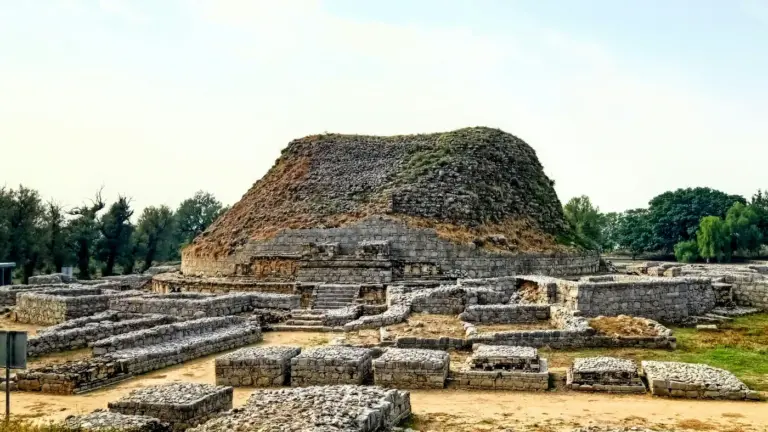
The Mauryan collapse was swift. Pushyamitra Sunga assassinated the last Mauryan king, Brihadratha, around 185 BCE and founded the Sunga dynasty. From the northwest, a wave of foreign invaders — Greeks, Shakas, Parthians, Kushanas — poured in. In the Deccan, the Satavahanas built a powerful indigenous empire. Together, these powers reshaped Indian civilization.
The Sunga Dynasty (185 – 73 BCE)
Pushyamitra Sunga seized power through a military coup. His dynasty ruled for about 112 years from Pataliputra and later Vidisha.
The Sungas are significant for three reasons:
Brahmanical revival. Pushyamitra performed the Ashvamedha (horse sacrifice) twice, signaling a deliberate return to Vedic rituals after the Buddhist emphasis of the Mauryas. This was not anti-Buddhist persecution as some older textbooks claim — Buddhist monasteries at Sanchi and Bharhut actually flourished under Sunga patronage. The Bharhut stupa railings and Sanchi toranas (gateways) were built during this period.
Greek resistance. Pushyamitra successfully repelled the Indo-Greek invasion led by Demetrius (or Menander, sources vary), defending Pataliputra from foreign occupation.
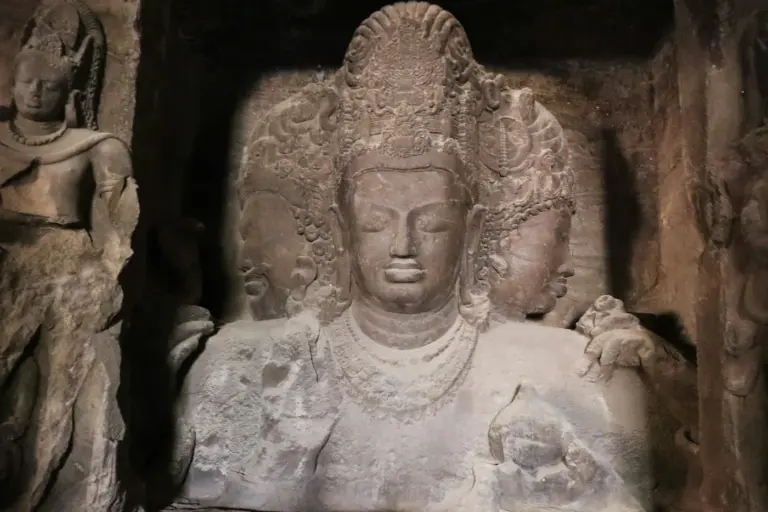
Cultural patronage. Despite limited political power, the Sungas contributed to the development of Hindu temple architecture and the early Brahmanical art tradition that would mature in the Gupta period.
The Kanva dynasty (73-28 BCE) succeeded the Sungas but was politically insignificant.
Indo-Greeks (c. 180 – 10 BCE)
The Indo-Greeks were descendants of Alexander's generals who had established kingdoms in Bactria (modern Afghanistan/Central Asia). They gradually pushed into the Indian subcontinent.
Menander I (Milinda) is the most important Indo-Greek ruler for UPSC. He ruled from Sagala (modern Sialkot, Pakistan) around 155-130 BCE. His fame rests on the Milinda Panha (Questions of Milinda), a Buddhist text recording his philosophical dialogue with the monk Nagasena. According to tradition, Menander converted to Buddhism.
Indo-Greek contributions to India:
- Coinage revolution. Indo-Greek coins were the first in India to bear ruler portraits and bilingual inscriptions (Greek on one side, Kharoshthi/Prakrit on the other). This set the standard for subsequent Indian coinage.
- Hellenistic art influence. Greek sculptural traditions — realistic human forms, draped clothing, naturalistic proportions — blended with Indian themes to eventually produce the Gandhara school of art under the Kushanas.
- Calendar and astronomy. Greek astronomical knowledge influenced Indian traditions, visible in texts like the Romaka Siddhanta.
Common student mistake: Students confuse Alexander's invasion (326 BCE) with the Indo-Greek kingdoms (180 BCE onward). Alexander never established lasting rule in India. The Indo-Greeks were a separate, later phenomenon based in Bactria.
The Shakas (Western Satraps, c. 1st century BCE – 4th century CE)
The Shakas (Scythians) displaced the Indo-Greeks in northwestern India. The most important Shaka ruler was Rudradaman I (c. 130-150 CE), a Western Satrap based in Ujjain.
Rudradaman I is significant for one primary reason: the Junagadh (Girnar) Rock Inscription. This is the first major inscription in chaste Sanskrit after Ashoka's Prakrit edicts — a gap of nearly 400 years. The inscription records Rudradaman's repair of the Sudarshana Lake (originally built under Chandragupta Maurya) and praises his military victories and cultural accomplishments.
The Junagadh inscription marks a critical turning point: the revival of Sanskrit as the language of royal power, a trend that would accelerate under the Guptas.
The Kushana Empire (c. 1st – 3rd century CE)
The Kushanas were Central Asian nomads (Yuezhi tribe) who migrated through Bactria into India. They built one of the largest empires of the ancient world, stretching from Central Asia to the Gangetic plain.
Kanishka I: The Greatest Kushana
Kanishka I is the most important Kushana ruler. His accession date — traditionally placed at 78 CE — is believed to mark the beginning of the Saka era, which remains India's national calendar.
Kanishka's capital was Purushapura (modern Peshawar). He also used Mathura as a secondary capital.
Key achievements:
Fourth Buddhist Council. Kanishka convened the Fourth Buddhist Council at Kundalvana, Kashmir. This council formalized the split between Hinayana and Mahayana Buddhism. The proceedings were recorded on copper plates in Sanskrit. This council transformed Buddhism from a monastic religion into a universal faith with the concept of Bodhisattvas — compassionate beings who delay their own enlightenment to help others.
Patron of Gandhara Art. Under Kanishka, the Gandhara school reached its peak. Buddha was depicted in human form for the first time (earlier art used symbols — the Bodhi tree, footprints, an empty throne). Gandhara sculptures show Greek influence: wavy hair, Roman toga-like robes, realistic musculature, halo. Simultaneously, the Mathura school developed a purely Indian idiom — red sandstone, more robust figures, indigenous clothing.
Coinage. Kushana gold coins are remarkable for depicting deities from multiple religions — Greek gods (Helios, Selene), Iranian gods (Mithra, Ataash), Hindu gods (Shiva, Buddha). This eclecticism reflected the Kushana Empire's position as a crossroads civilization. For the artistic traditions that followed, see our overview of Indian painting schools.
Silk Road trade. The Kushanas controlled key sections of the Silk Road, facilitating trade between Rome, China, and India. Kanishka's empire was the commercial bridge between East and West.
Scholars at Kanishka's court: Ashvaghosha (author of Buddhacharita), Nagarjuna (Madhyamaka philosophy), Charaka (medicine), Vasumitra (who presided over the Fourth Buddhist Council).
The Satavahanas (c. 1st century BCE – 3rd century CE)
While foreign dynasties ruled the north, the Satavahanas (also called Andhra dynasty) dominated the Deccan and parts of central India. They were India's most important indigenous post-Mauryan power.
Simuka was the founder. The greatest ruler was Gautamiputra Satakarni (c. 106-130 CE), whose achievements are recorded in the Nasik inscription by his mother, Gautami Balashri.
Gautamiputra Satakarni's Achievements:
- Defeated the Shakas, Yavanas (Greeks), and Pahlavas (Parthians)
- Claimed the title "destroyer of the pride of Kshatriyas"
- Revived Vedic sacrifices — performed Ashvamedha and other rituals
- Called himself "Ekabrahmana" — sole Brahmin, protector of the varna order
Satavahana Administration and Economy:
Feudal elements. The Satavahanas used a feudatory system — local chiefs (maharathis, mahabhojas, mahasenapatis) held considerable autonomous power. This is considered an early form of Indian feudalism.
Coinage. Satavahana coins were struck in lead, copper, and potin (a tin-copper alloy) — distinct from the gold coinage of the Kushanas. Their coins often bore the image of ships, reflecting their maritime orientation.
Trade. The Satavahanas controlled the trade routes between the western coast and the eastern Deccan. Ports like Sopara, Kalyan, and Bharuch connected India with the Roman Empire.
Cave architecture. The Satavahanas patronized rock-cut cave monasteries at Karle, Bhaja, Nasik, and Amaravati. The Amaravati stupa, with its distinctive white marble sculptures, represents a separate artistic tradition from both Gandhara and Mathura.
Roman Trade and India
The Post-Mauryan period saw an explosion of Indo-Roman trade, especially through South India.
Key evidence:
- The Periplus of the Erythraean Sea (1st century CE), a Greek merchant's guide, describes Indian ports, trade goods, and commercial practices in detail.
- Sangam literature mentions Yavana (Greek/Roman) traders in South Indian ports, particularly at Arikamedu (near Pondicherry), where archaeological excavation found Roman pottery, amphorae, and artefacts.
- India exported pepper, spices, muslin, pearls, and precious stones. Rome exported gold coins, wine, and coral.
- Pliny the Elder complained that Rome was losing 50 million sesterces annually to India — the famous "Roman gold drain." Large hoards of Roman gold coins found in South India confirm this.
This trade collapsed in the 3rd century CE when the Roman Empire's economy weakened.
Post-Mauryan Dynasties: Comparison Table
| Dynasty | Territory | Capital(s) | Notable Rulers | Key Contributions |
|---|---|---|---|---|
| Sungas | Magadha, Central India | Pataliputra, Vidisha | Pushyamitra Sunga | Brahmanical revival, Bharhut & Sanchi art |
| Indo-Greeks | Northwest India, Punjab | Sagala (Sialkot) | Menander I (Milinda) | Bilingual coins, Hellenistic art, Milinda Panha |
| Shakas | Western India, Gujarat | Ujjain | Rudradaman I | Junagadh inscription (first major Sanskrit inscription) |
| Kushanas | Central Asia to Gangetic plain | Purushapura (Peshawar), Mathura | Kanishka I | Gandhara art, 4th Buddhist Council, Silk Road trade, Saka era |
| Satavahanas | Deccan, Central-South India | Pratishthana (Paithan), Amaravati | Gautamiputra Satakarni | Feudatory system, cave architecture, lead/copper coinage |
| Chedi (Kalinga) | Kalinga (Odisha) | Kalinganagara | Kharavela | Hathigumpha inscription, Jain patronage |
Cultural Synthesis: The Big Picture
The Post-Mauryan period was not a "dark age" between the Mauryas and Guptas. It was a period of extraordinary cultural synthesis:
- Sanskrit revived as the language of power and literature, replacing Prakrit
- Bilingual and multi-script coinage reflected a cosmopolitan society
- Three art schools — Gandhara (Greco-Buddhist), Mathura (indigenous), Amaravati (Deccan) — developed simultaneously
- Mahayana Buddhism emerged, transforming a regional monastic tradition into a global religion
- India became the eastern terminus of the Silk Road, generating wealth that funded art, architecture, and scholarship
Tell Google you want more of this.
Add Anantam IAS as a preferred sourceOne tap, and this site shows up more often in your own Top Stories, AI Overviews and AI Mode. Remove it any time.