Context:
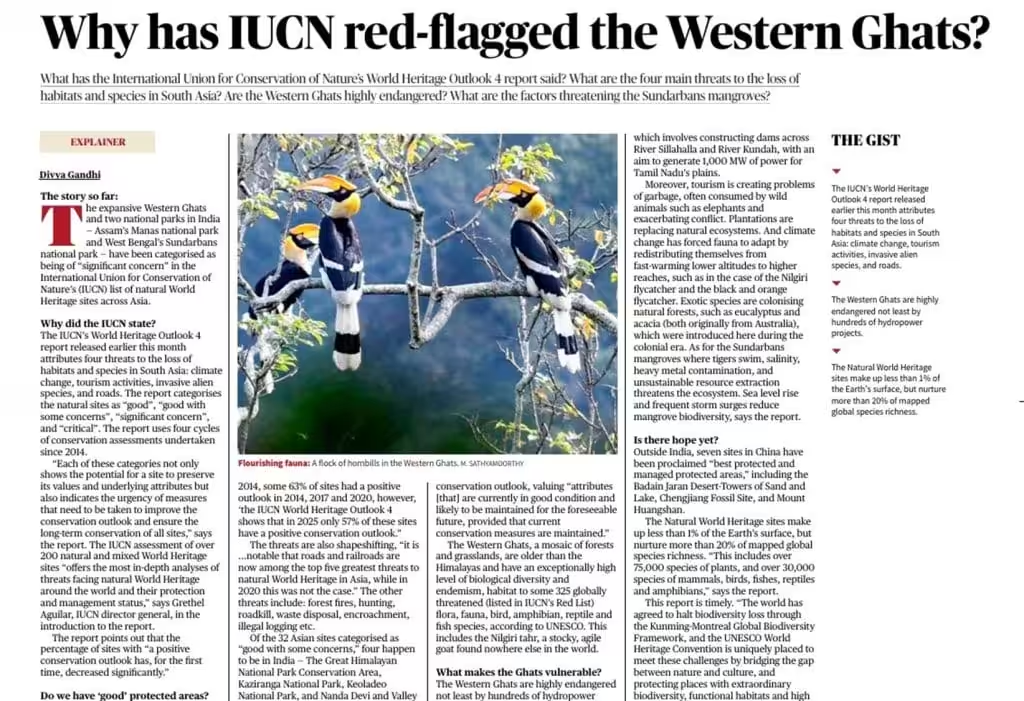
Recently IUCN’s World Heritage Outlook 4 report released earlier this month attributes four threats to the loss of habitats and species in South Asia.
UPSC Relevance:
Environment and IUCN report
UPSC PYQ:
Q. Which one of the following is not a site for in-situ method of conservation of flora? (2011)
(a) Biosphere Reserve
(b) Botanical Garden
(c) National Park
(d) Wildlife Sanctuary
About World Heritage Outlook 4 report:
- The IUCN World Heritage Outlook 4 will be launched at the IUCN World Conservation Congress in October 2025.
- The IUCN World Heritage Outlook is unique in its assessment of all World Heritage sites inscribed for their natural values simultaneously, at regular intervals (every 3-5 years).
- It is the only global assessment of natural World Heritage at a single point in time and recognises good conservation practice, supporting the role of World Heritage sites in demonstrating excellence.
- Implemented by the IUCN World Heritage Team and IUCN’s World Commission on Protected Areas (WCPA), it aims to provide reliable, transparent and independent information on the present situation and future prospects of natural World Heritage through Conservation Outlook Assessments.
- The report categorises the natural sites as “good”, “good with some concerns”, “signi cant concern”, and “critical”.
Objectives:
- Track the state of conservation of all World Heritage sites inscribed for their natural values over time and raise awareness of their importance.
- Recognise well-managed sites for their conservation efforts and encourage the transfer of good management practices between sites.
- Identify the most pressing conservation issues affecting World Heritage sites inscribed for their natural values and the actions needed to remedy those issues.
- Understand and communicate the benefits of World Heritage sites for local and global communities, for example in providing livelihoods and sustaining healthy ecosystems, at a time of fast-moving environmental, economic and humanitarian crises.
Outcome of World Heritage Outlook 4 report:
According to report four threats to the loss of habitats and species in South Asia: climate change, tourism activities, invasive alien species, and roads.
Major Concern in India:
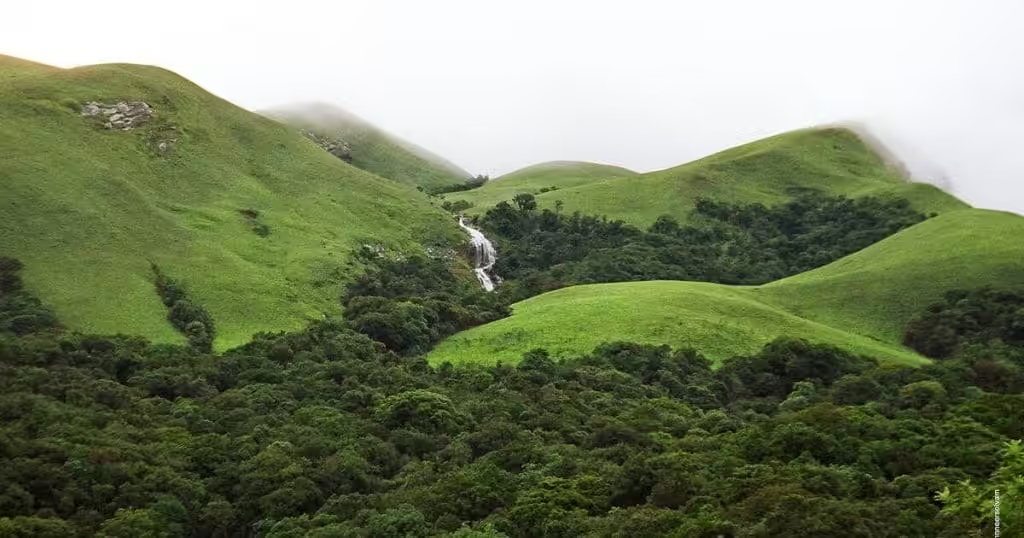
- Western Ghats: The Major Concern:
- The Western Ghats are older than the Himalayas and among the world’s eight biodiversity hotspots. Home to around 325 globally threatened species (IUCN Red List), including the Nilgiri tahr, an endemic mountain goat species.
| Threat | Description |
|---|---|
| Hydropower Projects | Projects like the ₹5,843 crore Sillahalla Pumped Storage Project in Tamil Nadu threaten riverine ecosystems. |
| Tourism Pressure | Litter and garbage, often eaten by wildlife, intensify human–animal conflict. |
| Plantations | Conversion of forests into tea, coffee, and eucalyptus plantations reduces native biodiversity. |
| Climate Change | Species are shifting to higher altitudes (e.g., Nilgiri flycatcher) due to warming. |
| Invasive Species | Eucalyptus and Acacia, introduced during colonial times, are displacing native flora. |
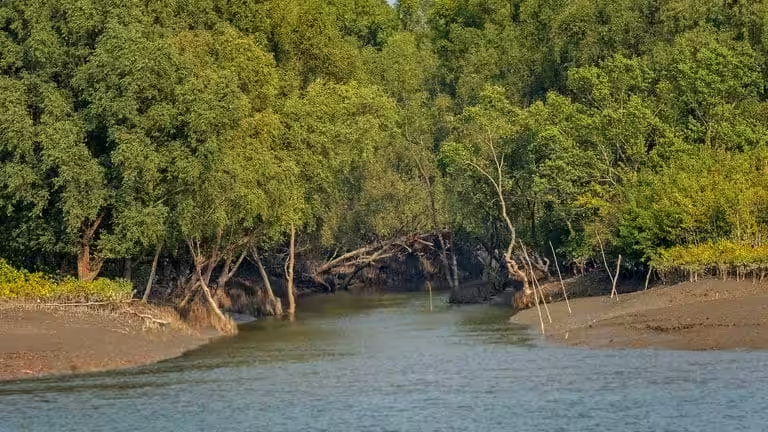
2. Sundarbans: The Mangrove Crisis:
- Threatened by salinity intrusion, heavy metal contamination, and unsustainable resource extraction.
- Sea-level rise and frequent storm surges are degrading mangrove biodiversity.
- The ecosystem is under dual stress — ecological degradation and climate vulnerability.
Hope and Good Practices:
- China’s seven sites are rated among the “Best Protected” globally, reflecting effective management.
- Four Indian sites — Great Himalayan National Park, Kaziranga, Keoladeo, and Nanda Devi–Valley of Flowers — are rated as “Good with Some Concerns.”
- Khangchendzonga National Park (Sikkim) is rated “Good” and can retain this status if current measures continue.
Tell Google you want more of this.
Add Anantam IAS as a preferred sourceOne tap, and this site shows up more often in your own Top Stories, AI Overviews and AI Mode. Remove it any time.