The Vedic period is the foundation of everything that follows in Indian civilisation. From roughly 1500 BCE to 600 BCE, it spans the arrival of the Indo-Aryans in the Indian subcontinent through the composition of the Vedas, the emergence of a complex social hierarchy, and eventually the philosophical revolution of the Upanishads that questioned everything the earlier Vedic tradition had built.
For UPSC, the Vedic period is one of the most consistently tested topics in Ancient History. The Early Vedic and Later Vedic phases are treated as distinct periods with measurable differences — and examiners love questions that test whether you actually know those differences. Know your Vedas, know the Varna system's evolution, and know what changed between the two phases.
The Four Vedas and Vedic Literature
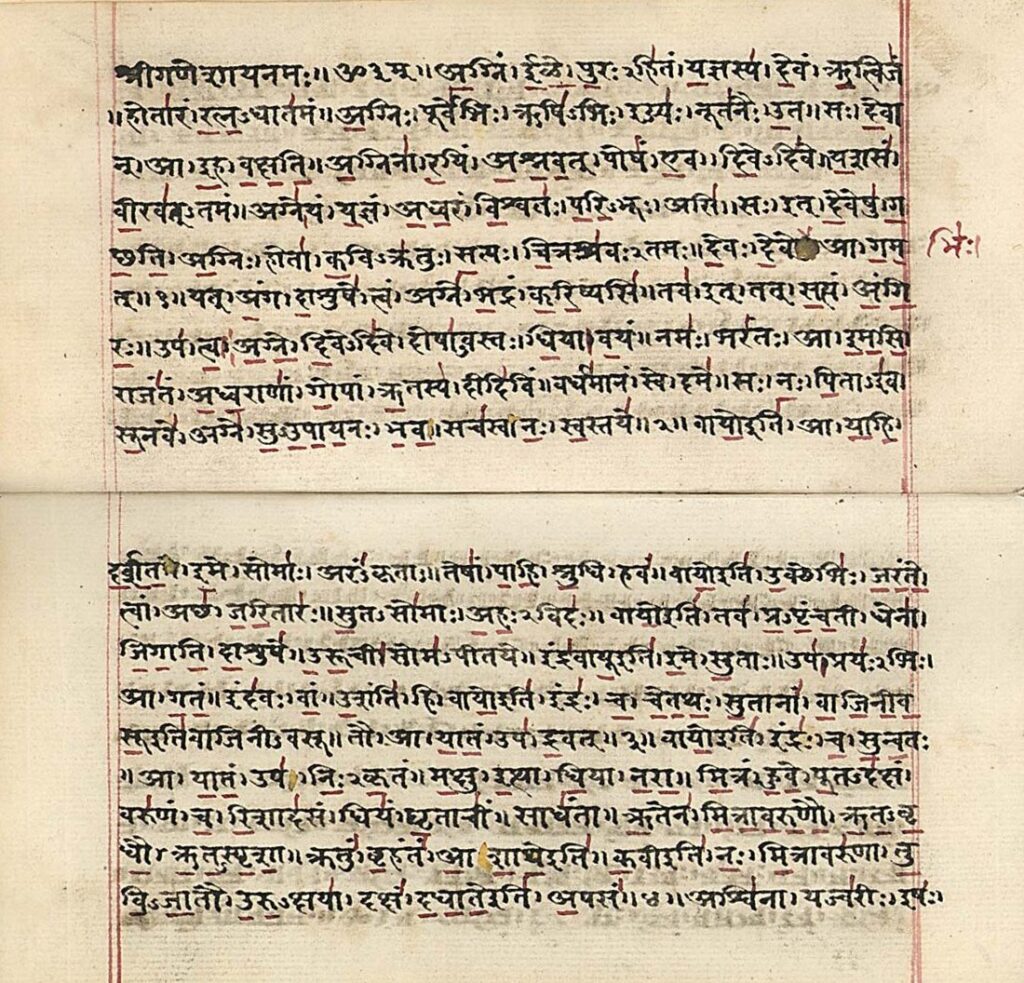
The Vedas are the oldest texts of the Indian tradition. "Veda" comes from the Sanskrit root vid — to know. There are four Vedas, each with a distinct character.
Rigveda
The Rigveda is the oldest of the four — composed roughly between 1500 and 1000 BCE. It contains 1,028 hymns (suktas) arranged in 10 mandalas (books). These hymns are prayers and praises addressed to deities, primarily Indra (god of thunder and war — the most celebrated deity), Agni (fire), Varuna (cosmic order), Soma (ritual drink/deity), and Surya (sun).
The Rigveda is our primary source for Early Vedic society. Books 2 through 7 are the oldest and are called the "family books" because each is associated with a different priestly lineage. Books 1, 8, 9, and 10 are later additions. The famous Purusha Sukta (Rigveda 10.90), which describes the origin of the four varnas from the cosmic being Purusha, is in Book 10 — one of the later additions, suggesting the rigid varna system was a Later Vedic development.
Samaveda, Yajurveda, Atharvaveda
- Samaveda — the "Veda of melodies." It is essentially a musical rearrangement of Rigvedic hymns for chanting during soma rituals. Almost all of its 1,875 verses are drawn from the Rigveda. The priest who chanted it was the udgatar.
- Yajurveda — the "Veda of sacrificial formulas." It contains prose and verse mantras used by the adhvaryu priest during rituals. It exists in two recensions: the Krishna (Black) Yajurveda (which mixes mantras and explanatory prose) and the Shukla (White) Yajurveda (which separates them). The Yajurveda reflects the Later Vedic obsession with elaborate ritual.
- Atharvaveda — the "Veda of the Atharvans." It stands apart from the other three — it contains spells, charms, incantations, and hymns for everyday life: curing illness, warding off evil, ensuring good harvests, winning love. It was long considered non-canonical by orthodox tradition but is invaluable for understanding popular religion. It also contains some of the earliest references to medicine.
Each Veda has four parts: Samhitas (hymn collections), Brahmanas (ritual explanations), Aranyakas (forest texts, transitional), and Upanishads (philosophical discussions).
Early Vedic Period (1500–1000 BCE)
The Early Vedic period is reconstructed almost entirely from the Rigveda. The Indo-Aryans entered the subcontinent through the northwest passes and initially settled in the Sapta Sindhu region — the land of seven rivers, roughly the Punjab and northwest frontier.
Society in the Early Vedic Period
Society was tribal and pastoral. The basic unit was the family (griha), which grouped into kula (clan), then grama (village), then vishti (tribe). The tribe was called a jana, and the territory it occupied was the janapada.
The key social divisions were based on occupation and function, but these were not yet rigid or hereditary. A person could change occupations. The Rigveda shows Brahmins who tended cattle and warriors who composed hymns.
Women's position was relatively better than in the Later Vedic period. Women called Brahmavadinis could study the Vedas and participate in philosophical debates. The Rigveda mentions women seers (rishikas) — Lopamudra, Ghosa, Apala, Vishvavara among them. Widow remarriage (niyoga) was permitted. Child marriage was uncommon. Women attended sabhas and samitis (assemblies).
Cattle were the primary form of wealth. The word gotra (lineage group) literally means "cattle pen." Wars were fought over cattle (gavishti — "searching for cows"). Coins were not yet in use — cattle and gold served as currency. Giving cattle as gifts or dakshina (ritual fees) was the highest form of generosity.
Polity in the Early Vedic Period
The political system was tribal, led by the Rajan (chief/king). But the Rajan was not an absolute monarch — power was checked by two assemblies:
- Sabha — a smaller, aristocratic council of elders
- Samiti — a larger popular assembly of all (male) tribe members
The Rajan's primary role was military leadership. He collected voluntary offerings (bali) rather than a fixed tax. The Purohita (chief priest) held enormous influence — no major decision was taken without him. The Senani was the military commander.
There were no standing armies, no fixed capitals, no revenue administration. It was a mobile, pastoral polity.
Economy in the Early Vedic Period
The economy was primarily pastoral — cattle herding was central. Agriculture was practiced but secondary. The Rigveda mentions yava (barley) as the primary crop — rice appears rarely and late.
Trade existed but was local. The concept of panis — wealthy traders (sometimes portrayed negatively in the Rigveda as hoarding cattle) — suggests commercial activity. But there was no coinage. Rivers served as trade routes.
Iron (ayas in the Rigveda refers to copper or bronze; iron is not clearly attested until the Later Vedic period) was not yet in widespread use.
Later Vedic Period (1000–600 BCE)
The Later Vedic period is reconstructed from the Samaveda, Yajurveda, Atharvaveda, the Brahmanas, Aranyakas, and the earlier Upanishads. The Aryans had by now spread eastward — from the Punjab into the Gangetic plains, particularly the Doab (region between the Ganga and Yamuna).
This eastward expansion was enabled by iron tools, which allowed forest clearance and wet rice cultivation in the Gangetic plain. It was a period of dramatic social consolidation — and rigidification.
Society in the Later Vedic Period
Society became settled, agricultural, and increasingly stratified. The varna system hardened into hereditary, birth-based categories.
Women's position declined sharply. Women were excluded from the sabha and samiti. The Aitareya Brahmana declares the birth of a daughter as a misery. Widow remarriage became difficult. The Manusmriti-style restrictions began taking shape. Child marriage became more common. Education for women was largely restricted to domestic arts.
The Ashrama system (four stages of life — Brahmacharya, Grihastha, Vanaprastha, Sannyasa) was formalised in this period, though its rigid prescription came later.
The Varna System
The Varna system is the defining social institution of the Later Vedic period. The word varna means "colour" — though whether this originally referred to skin colour or symbolic colour is debated.
The Purusha Sukta of the Rigveda (Book 10) provides the mythological origin: the four varnas emerged from the sacrifice of the cosmic Purusha — Brahmins from the mouth, Kshatriyas from the arms, Vaishyas from the thighs, Shudras from the feet.
In practice:
- Brahmins — priests, teachers, scholars. Monopoly on ritual knowledge.
- Kshatriyas — warriors, rulers. Provided physical protection.
- Vaishyas — merchants, farmers, artisans. Provided economic production.
- Shudras — servants. Served the upper three varnas. They were excluded from the upanayana (sacred thread ceremony) and Vedic study.
The critical change from Early to Later Vedic: varna became hereditary. You were born into it. Mobility between varnas became socially unacceptable (though individuals certainly moved — the Kshatriya Vishvamitra became a Brahmin rishi in tradition).
The Brahmanas repeatedly assert Brahmin supremacy. The elaborate sacrificial rituals described in the Yajurveda and Brahmanas could only be conducted by Brahmins — this gave them structural economic and political power.
Polity in the Later Vedic Period
Power became more centralised and monarchical. The sabha and samiti declined in importance. Territorial kingdoms (janapadas, and eventually mahajanapadas) replaced tribal confederacies.
New royal titles proliferated: Samrat (emperor over other kings), Ekrat (sole ruler), Virat (ruler of the people), Svaraj (self-ruler) — each used in different ritual contexts. Elaborate royal consecration ceremonies emerged:
- Rajasuya — royal consecration ceremony establishing the king's authority
- Vajapeya — chariot race ritual reinforcing royal power; included a drinking ceremony
- Ashvamedha — horse sacrifice asserting imperial sovereignty over all territories the horse traversed unchallenged
These rituals required armies of Brahmin priests, enormous wealth, and elaborate preparation — which simultaneously glorified the king and enriched the Brahmin class.
The Purohita's power grew. The Aitareya Brahmana lists the Purohita as the most essential royal advisor. Without a competent Purohita, a king could not rule effectively.
Economy in the Later Vedic Period
The economy became agrarian. Iron tools — especially the heavy iron ploughshare — allowed deep ploughing of the alluvial Gangetic soil. Rice (vrihi) became the dominant crop alongside barley. New crops like wheat, lentils, and sugarcane appear.
Crafts became more specialised: carpenters, blacksmiths, potters, weavers, tanners are all mentioned in Later Vedic texts. Vaishyas paid bali (tribute) to the king — this was the beginning of systematic revenue collection.
Long-distance trade expanded. The Atharvaveda mentions merchants (vanij) traveling by sea. The concept of nishka (gold coins or ornaments) as currency emerged, though coins proper came later with the Punch-marked coins of the Mahajanapada period.
Religion in the Later Vedic Period
Religion became dominated by elaborate, expensive sacrificial rituals controlled by Brahmin priests. The Yajurveda and the Brahmanas describe these rituals in extraordinary detail — the Shatapatha Brahmana alone runs to thousands of pages.
The focus shifted from the Rigvedic naturalistic deities (Indra, Agni, Varuna) to the concept of Brahman (ultimate cosmic principle) and Atman (individual soul). Prajapati emerged as the supreme deity — the lord of creation.
This ritualism generated a reaction. The Aranyakas (forest texts) began moving away from ritual toward philosophical speculation. The Upanishads took this further — much further.
Early vs Later Vedic Period: Comparison Table
| Aspect | Early Vedic Period (1500–1000 BCE) | Later Vedic Period (1000–600 BCE) |
|---|---|---|
| Primary Text | Rigveda | Samaveda, Yajurveda, Atharvaveda, Brahmanas |
| Geographic Base | Sapta Sindhu (Punjab, Northwest) | Gangetic Plains (Doab, Kosala, Videha) |
| Primary Economy | Pastoral (cattle-based) | Agrarian (rice and barley) |
| Key Technology | Copper/Bronze (ayas) | Iron ploughshare |
| Social Structure | Flexible, occupation-based divisions | Rigid hereditary Varna system |
| Women's Status | Relatively better; Brahmavadinis, assembly participation | Declined; excluded from sabha, restricted education |
| Political System | Tribal; Rajan checked by Sabha and Samiti | Territorial kingdoms; centralised monarchy |
| Assemblies | Sabha and Samiti active and powerful | Sabha and Samiti decline |
| Chief Deity | Indra (most hymns); Agni, Varuna | Prajapati; Brahman as ultimate concept |
| Religious Focus | Nature worship, simpler rituals | Elaborate, expensive sacrifices; Brahmin monopoly |
| Royal Rituals | Simple; Rajan's role military | Rajasuya, Vajapeya, Ashvamedha |
| Revenue System | Voluntary bali (gift/tribute) | Regular bali payments; early taxation |
| Settlement | Mobile, pastoral, shifting | Fixed, village-based, urban centres emerging |
The Upanishads: The Philosophical Revolt
The Upanishads are the last layer of Vedic literature — the "Vedanta" (end of the Veda, or the culmination of Vedic thought). There are 108 Upanishads in total, but the principal Upanishads are 13 — the ones commented on by Shankaracharya and other major philosophers.
The oldest Upanishads — Brihadaranyaka, Chandogya, Taittiriya, Aitareya — belong to the Later Vedic period (c. 800–600 BCE). They represent a philosophical reaction against Brahminical ritualism.
Core Ideas of the Upanishads
Brahman-Atman identity: The ultimate insight of the Upanishads is captured in the mahavakyas (great sayings):
- Aham Brahmasmi — "I am Brahman" (Brihadaranyaka Upanishad)
- Tat Tvam Asi — "That thou art" (Chandogya Upanishad)
- Prajnanam Brahma — "Consciousness is Brahman" (Aitareya Upanishad)
- Ayam Atma Brahma — "This Self is Brahman" (Mandukya Upanishad)
The Atman (individual self) and Brahman (universal self) are ultimately identical. Ritual cannot achieve liberation — only knowledge (jnana) can.
Karma and rebirth: The Upanishads develop the concept of karma — the moral weight of actions — and samsara — the cycle of rebirth determined by accumulated karma. Liberation (moksha) means escape from this cycle.
Challenge to Brahmin authority: When the Chandogya Upanishad shows a king (Kshatriya) teaching a Brahmin philosopher, or when Yajnavalkya demolishes ritual theology in the Brihadaranyaka, the texts are implicitly questioning the ritual monopoly of the Brahmin class.
The Upanishads created the intellectual foundation for later Vedanta philosophy and directly influenced the emergence of Buddhism and Jainism — both of which rejected Brahminical ritual while accepting some Upanishadic concepts.
Key Dates and Entities
| Period/Text | Approximate Date | Significance |
|---|---|---|
| Rigveda composed | c. 1500–1000 BCE | Primary source for Early Vedic society |
| Later Vedas (Sam, Yajur, Atharva) | c. 1000–700 BCE | Reflect social consolidation |
| Brahmanas | c. 900–700 BCE | Ritual manuals; establish Brahmin dominance |
| Aranyakas | c. 800–600 BCE | Transitional; forest philosophy |
| Principal Upanishads | c. 800–400 BCE | Philosophical foundation; Brahman-Atman |
| Iron Age begins in India | c. 1000 BCE | Enables Gangetic expansion |
| Mahajanapadas emerge | c. 600 BCE | Political outcome of Later Vedic period |
Frequently Asked Questions About the Vedic Period
What is the difference between Early Vedic and Later Vedic periods?
The Early Vedic period (1500–1000 BCE) was pastoral, tribal, and relatively egalitarian, based primarily in the Punjab region. The Later Vedic period (1000–600 BCE) was agricultural, monarchical, and socially rigid, spreading across the Gangetic plains. The varna system became hereditary, women's status declined, and elaborate Brahmin-controlled rituals replaced simpler nature worship.
Which is the oldest Veda and what does it contain?
The Rigveda is the oldest — composed c. 1500–1000 BCE. It contains 1,028 hymns in 10 mandalas addressed to deities including Indra (most hymns), Agni, Varuna, Soma, and Surya. It is the primary source for understanding Early Vedic society, economy, and religion.
What is the Varna system and when did it become hereditary?
The Varna system divides society into four groups — Brahmins (priests), Kshatriyas (warriors), Vaishyas (merchants/farmers), and Shudras (servants). While the Purusha Sukta of the Rigveda mentions the four varnas, the system became rigid and birth-based during the Later Vedic period (1000–600 BCE), not the Early Vedic period.
What do the Upanishads teach?
The Upanishads teach that the individual self (Atman) is identical to the universal reality (Brahman), captured in mahavakyas like "Tat Tvam Asi" and "Aham Brahmasmi." They reject the idea that elaborate rituals lead to liberation, arguing that only true knowledge (jnana) can end the cycle of rebirth (samsara). They form the basis of Vedanta philosophy.
What was the position of women in the Vedic period?
Women's position was significantly better in the Early Vedic period — Brahmavadinis could study the Vedas, women seers like Lopamudra and Ghosa composed hymns, and women participated in assemblies. During the Later Vedic period, women were excluded from the sabha and samiti, restricted from Vedic study, and the texts began expressing preference for male children.
Tell Google you want more of this.
Add Anantam IAS as a preferred sourceOne tap, and this site shows up more often in your own Top Stories, AI Overviews and AI Mode. Remove it any time.