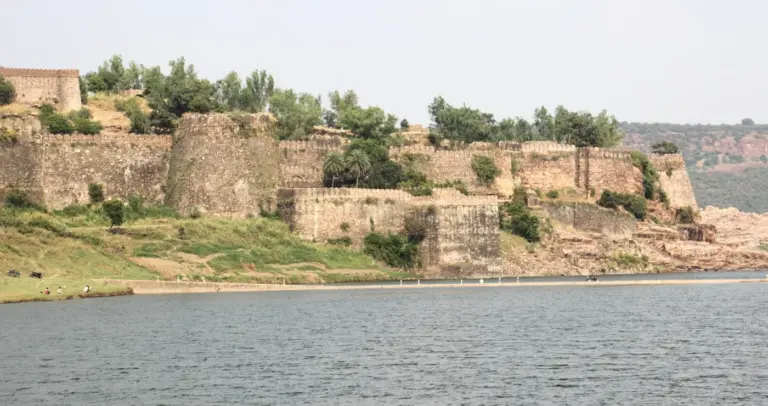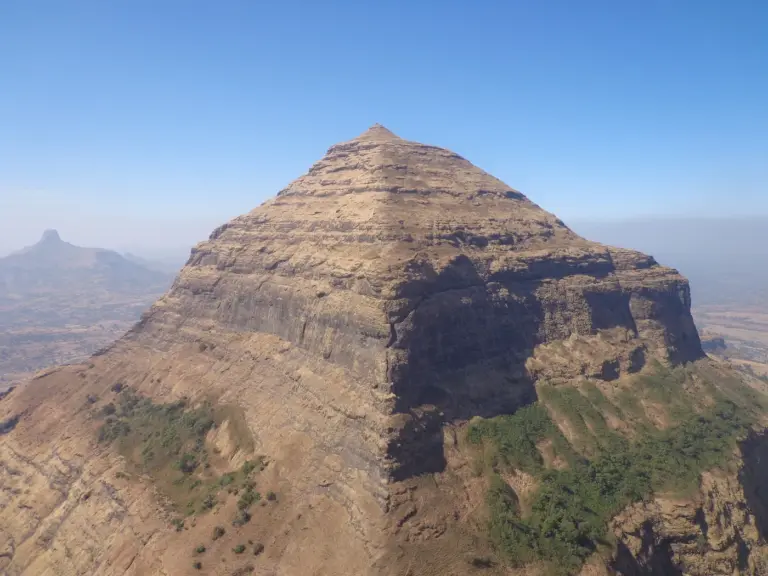
The Maratha Empire (1674–1818) was one of the largest Indian states of the 18th century — at its peak controlling territory from the Indus to the Bay of Bengal and from the Himalayas to the Deccan. Founded by Chhatrapati Shivaji Maharaj in 1674, the Empire transformed from a centralised kingdom under Shivaji into a confederacy of regional powers under the Peshwas, became the dominant Indian power after the decline of the Mughals, suffered a catastrophic defeat at the Third Battle of Panipat (1761), and was ultimately destroyed by the British in the Anglo-Maratha Wars (1775–1818).
For UPSC, the Maratha Empire is essential — it is one of the most extensively tested topics in Medieval/Modern History.
Phase 1: Foundation by Shivaji (1674–1680)
(For detailed coverage of Shivaji's life, see the dedicated article on Chhatrapati Shivaji Maharaj.)
Key features of Shivaji's state:
- Founded with the coronation at Raigad in 1674
- Centralised administration under the Ashtapradhan (8-minister council)
- Revenue system based on direct collection (1/3 of produce as land revenue)
- Chauth and Sardeshmukhi — taxes levied on territories outside direct control
- Naval power — among the few Indian rulers to develop a navy
- Shivaji died in April 1680
Phase 2: Sambhaji and Mughal Conflict (1681–1707)
Sambhaji (1681–1689) succeeded his father and led nine years of resistance against Aurangzeb's massive Deccan campaign. He was captured and executed by Aurangzeb in 1689 — but Maratha resistance continued under his half-brother Rajaram and later under Tarabai (Rajaram's widow).
The 27 years of Mughal-Maratha war (1681–1707) achieved what Shivaji's lifetime had not:
- Drained the Mughal treasury and military
- Forged Maratha unity through shared resistance
- Established Maratha presence across the Deccan
- Trained generations of Maratha commanders in continuous warfare
- Aurangzeb died in 1707 at Aurangabad, never having broken the Marathas
This period is when the Maratha state evolved from a kingdom into a continent-spanning fighting force.
Phase 3: The Peshwa Era (1707–1761)
After 1707, the Maratha state shifted its centre of power from the Chhatrapati to the Peshwa (Prime Minister). The Peshwas became the de facto rulers while the Chhatrapatis (descendants of Shivaji) retained ceremonial sovereignty.
Why the Shift to Peshwa Rule?
- After Shivaji's grandson Shahu was released by the Mughals (1707), he had to fight off internal challenges (from Tarabai's faction)
- He depended heavily on Balaji Vishwanath, his chief minister, to consolidate power
- Balaji Vishwanath's success made the Peshwa the most powerful figure in the state
- Subsequent Chhatrapatis became increasingly nominal
The Eight Peshwas
| Peshwa | Reign | Major Achievement |
|---|---|---|
| Balaji Vishwanath | 1713–1720 | Consolidated Maratha power; secured Mughal grant of Chauth and Sardeshmukhi over six Deccan provinces |
| Baji Rao I | 1720–1740 | Greatest Peshwa; expanded Maratha power across India; never lost a battle |
| Balaji Baji Rao (Nana Saheb) | 1740–1761 | Reached zenith — but suffered Third Battle of Panipat |
| Madhav Rao I | 1761–1772 | Restored Maratha power after Panipat |
| Narayan Rao | 1772–1773 | Murdered |
| Madhav Rao II | 1774–1795 | Mostly under regency; First Anglo-Maratha War |
| Baji Rao II | 1796–1818 | Last Peshwa; Second and Third Anglo-Maratha Wars |
| Nana Saheb (adopted) | 1857 | Briefly restored during 1857 revolt |
Baji Rao I: The Greatest Peshwa
Baji Rao I (1720–1740) is widely considered the greatest of the Peshwas. He:
- Conducted 40+ military campaigns without losing a single battle
- Coined the strategy: "Strike at the trunk of the withering tree" — referring to attacking the weakened Mughal capital at Delhi rather than fighting branches separately
- Extended Maratha power to Malwa, Gujarat, Bundelkhand, parts of Doab
- Defeated the Nizam of Hyderabad multiple times
- Died young (at 39) in 1740
Under Baji Rao I, the Marathas became the paramount power in India.
Maratha Confederacy
By the mid-18th century, the Maratha Empire had transformed into a confederacy of five major chieftaincies (and many smaller ones) — with the Peshwa at Pune as the nominal head:
| Chieftaincy | Capital | Region | Founder/Family |
|---|---|---|---|
| Peshwas | Pune | Maharashtra heartland | Bhat family |
| Holkars | Indore | Malwa | Malhar Rao Holkar |
| Scindias | Gwalior | Central India | Ranoji Scindia |
| Gaekwads | Baroda (Vadodara) | Gujarat | Pilaji Gaekwad |
| Bhonsles | Nagpur | Eastern India (parts of Bengal, Odisha, Chhattisgarh) | Raghuji Bhonsle |
This confederacy structure gave the Marathas vast reach but also created coordination problems — the chieftaincies often pursued their own interests, weakening the overall Maratha effort.
The Third Battle of Panipat (January 14, 1761)
The Third Battle of Panipat between the Marathas and Ahmad Shah Abdali (Afghanistan) was the defining catastrophe of the Maratha Empire.
Background
- Marathas had advanced as far north as Punjab and Delhi by the 1750s
- They became the protectors of the Mughal Emperor (taking the role from the Sayyid brothers earlier)
- Conflict with Ahmad Shah Abdali, the Afghan ruler — who saw himself as the rightful protector of Sunni Muslims in India
- The battle occurred at Panipat (Haryana) — the same site as the earlier two Panipat battles (1526, 1556)
The Battle
| Side | Commander | Forces |
|---|---|---|
| Marathas | Sadashivrao Bhau (Bhausaheb) | ~70,000 troops + ~30,000 camp followers |
| Afghans | Ahmad Shah Abdali | ~40,000 + Indian Muslim allies (Najib-ud-Daula, Awadh) |
The battle was fought on January 14, 1761. Despite initial Maratha success, the day ended in catastrophe:
- Sadashivrao Bhau killed
- Vishwasrao (the heir apparent — Peshwa Balaji Baji Rao's eldest son) killed
- 40,000+ Marathas killed in the battle and the subsequent slaughter
- Tens of thousands of camp followers (women, children, non-combatants) killed or enslaved
Peshwa Balaji Baji Rao, on receiving the news in Pune, reportedly died of grief shortly after.
Why Did the Marathas Lose?
- Long supply lines — Maratha forces were 1,500 km from their base at Pune
- Lack of local allies — northern Indian rulers (Rajputs, Jats, Sikhs) refused to support the Marathas
- Najib-ud-Daula's allies — the Afghan army was supplemented by Indian Muslim allies
- Strategic mistakes — Sadashivrao Bhau insisted on a pitched battle rather than guerrilla warfare
- Long siege — Marathas were forced to fight when starvation became critical
Long-term Consequences
- Maratha expansion northward halted permanently
- The myth of Maratha invincibility shattered
- Power vacuum in north India that the British would eventually fill
- It "took ten years for the Marathas to recover" (in the words of historian Sir Jadunath Sarkar) — but they never regained the position they had lost
Phase 4: Recovery and Anglo-Maratha Wars
Madhav Rao I (1761–1772)
The young Madhav Rao I restored Maratha power within a decade:
- Defeated the Nizam at the Battle of Rakshasbhuvan (1763)
- Re-established Maratha supremacy over the Mysore (Hyder Ali)
- Re-extended Maratha influence to north India
- Brought Mughal Emperor Shah Alam II under Maratha protection
The Three Anglo-Maratha Wars
| War | Dates | Outcome |
|---|---|---|
| First Anglo-Maratha War | 1775–1782 | Treaty of Salbai (1782) — Maratha victory; status quo ante |
| Second Anglo-Maratha War | 1803–1805 | British victory; Marathas accepted subsidiary alliance |
| Third Anglo-Maratha War | 1817–1818 | Total British victory; Maratha Empire dissolved |
First Anglo-Maratha War (1775–1782)
Triggered by the British support for Raghunath Rao (uncle of the murdered Peshwa Narayan Rao) in a succession dispute. The Marathas defeated the British at:
- Battle of Talegaon (1779) — humiliating British defeat; Convention of Wadgaon
- The Treaty of Salbai (1782) restored status quo — a rare Maratha victory over the British
Second Anglo-Maratha War (1803–1805)
By 1800, the Maratha Empire was weakened by internal conflict. Lord Wellesley exploited divisions:
- Defeated Scindia and Bhonsle at the battles of Assaye (1803) and Argaon (1803)
- Forced Peshwa Baji Rao II into the Treaty of Bassein (1802) — accepting subsidiary alliance
- Marathas began to resist; war broke out
- Treaty of Surji-Anjangaon (1803) with Scindia
- Treaty of Deogaon (1803) with Bhonsle
Third Anglo-Maratha War (1817–1818)
The final war was triggered by Maratha resentment of British dominance:
- Battle of Khirki (1817) — British defeated Peshwa
- Battle of Sitabuldi (1817) — Defeated Bhonsle of Nagpur
- Battle of Mahidpur (1817) — Defeated Holkar
- Treaty of Mandsaur (1818) with Holkar
- Peshwa Baji Rao II surrendered — ended Peshwaship
- Most Maratha territory annexed; smaller chieftaincies became British protectorates
The Maratha Empire formally ended in 1818.
Why the Marathas Failed Against the British
| Factor | Detail |
|---|---|
| Internal divisions | Confederacy structure prevented unified action |
| Lack of common command | Each chieftain pursued own interests |
| Inferior weapons | Maratha artillery was outdated by 1800 |
| No naval response | Marathas had little to challenge British naval power |
| British financial and organisational advantage | Backed by Bengal revenue and modern bureaucracy |
| Subsidiary alliances | Allowed British to pick off chieftains one by one |
Legacy
Geographic reach: The Maratha Empire was the last truly indigenous Indian power to rule a vast territory before the British. It laid claim to most of India.
Administrative legacy: The Peshwa system, the Ashtapradhan structure, the Chauth/Sardeshmukhi system — all influenced subsequent Indian administration.
Maratha identity: The Empire forged a strong Maratha identity that continues in modern Maharashtra.
Lessons in confederation: The Maratha confederacy is studied as both a successful federal experiment (in the early period) and a cautionary tale of unity loss (in the later period).
UPSC Relevance
GS1 (Medieval/Modern History): Maratha Empire, Mughal-Maratha relations, Peshwa rule, Anglo-Maratha Wars, Third Battle of Panipat.
Key Prelims facts:
- Founder: Chhatrapati Shivaji Maharaj (1674)
- End: Third Anglo-Maratha War, 1818
- Key Peshwas: Balaji Vishwanath, Baji Rao I, Balaji Baji Rao
- Greatest Peshwa: Baji Rao I
- Confederacy chieftains: Holkars (Indore), Scindias (Gwalior), Gaekwads (Baroda), Bhonsles (Nagpur)
- Third Battle of Panipat: January 14, 1761; Marathas vs. Ahmad Shah Abdali
- Maratha commander at Panipat: Sadashivrao Bhau (killed)
- First Anglo-Maratha War: 1775-82, Treaty of Salbai
- Second Anglo-Maratha War: 1803-05, Treaty of Bassein (1802)
- Third Anglo-Maratha War: 1817-18; final fall
- Last Peshwa: Baji Rao II (surrendered to British)
Tell Google you want more of this.
Add Anantam IAS as a preferred sourceOne tap, and this site shows up more often in your own Top Stories, AI Overviews and AI Mode. Remove it any time.